LIN vs. CAN Communication: Converter Design Tradeoffs for OEM Engineers
Integration Challenges and Solutions
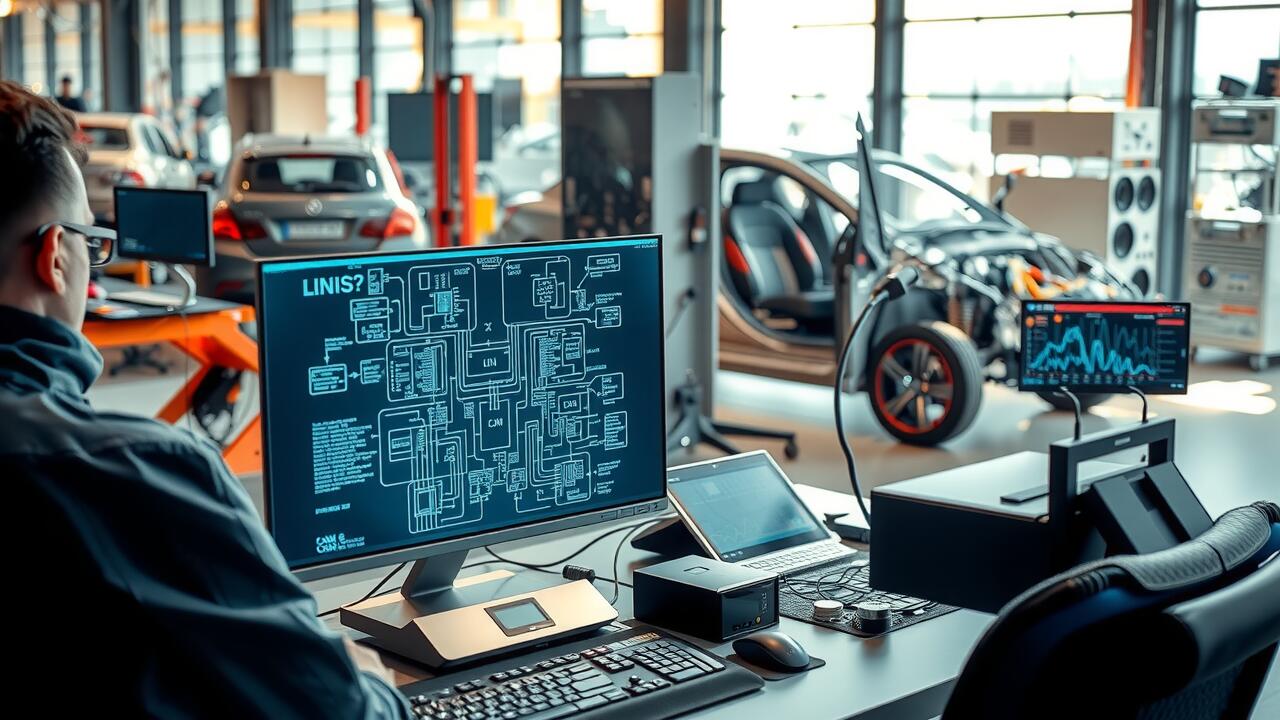
Navigating the integration of LIN and CAN communication can be exhilarating, yet it comes with notable challenges. OEM engineers often face issues related to signal interference and protocol differences, which can drastically impact system performance. For instance, a common problem occurs when a device operates effectively on LIN but struggles to communicate seamlessly with CAN networks. Implementing Axiomatic LIN CAN converters can enhance compatibility by bridging protocol gaps, offering a robust solution to complex integration issues. The proper selection of these converters not only simplifies communication but also facilitates data transmission across various vehicle systems.
Understanding the nuances of each protocol is crucial for successful integration. Engineers must evaluate timing requirements, bus lengths, and termination resistors to optimise performance. A study showed that focusing on these parameters resulted in a 30% increase in reliability for inter-module communication. Identifying and mitigating signal degradation, especially in long vehicle architectures, is essential. Harnessing innovative tools and technologies ensures that both LIN and CAN can support scalability while maintaining system integrity.
What Are Common Integration Problems with LIN and CAN? (Identifying and addressing challenges)
Integrating LIN and CAN systems often presents unique challenges that can leave engineers scratching their heads. For instance, managing differing data rates between LIN, which typically operates at 20 Kbps, and CAN, often operating at 1 Mbps, requires careful design consideration. The complexity increases when multiple devices are involved, as ensuring proper data packet transmission without collisions can significantly impact system efficiency. Axiomatic LIN CAN converters can provide seamless interoperability, tackling these disparities head-on by efficiently coordinating between the two protocols.
Another common integration hurdle arises from the varying power consumption profiles of LIN and CAN. LIN networks, designed for low-power applications, can clash with the demands of CAN systems that are more robust. Engineers often find themselves troubleshooting communication failures when trying to merge signal integrity with power efficiency. Implementing stringent adherence to automotive standards, alongside appropriate converter solutions, can mitigate these risks. By embracing these practical strategies, OEMs can streamline their integration process, attain operational reliability, and extend the longevity of their systems while ensuring flexibility for future upgrades.
5 Key Strategies for Effective Converter Design
Success in converter design hinges on precise integration of various components, ensuring compatibility between LIN and CAN protocols. Start by conducting a thorough assessment of existing systems. For example, consider how Axiomatic LIN CAN converters can streamline data transfer across networks, optimising communication between the master and slave devices while adhering to industry standards like ISO 17987 for LIN. This foundation lays the groundwork for enhancements in efficiency and reliability throughout the vehicle's architecture.
Another critical strategy involves focusing on power consumption and thermal management. Assess the thermal profiles of the components to prevent overheating, which could lead to system failures. In a real-world scenario, optimising power usage can reduce energy draw by up to 30%, translating to longer-lasting systems. Specify components that offer low quiescent current when choosing parts for your converter design. This attention to detail not only meets immediate requirements but positions the design for scalability and future technological advancements.
What Are the Essential Steps to Consider? (Practical design strategies)
When embarking on the design of Axiomatic LIN CAN converters, engineers must first analyse the specific requirements of the vehicle network. Each application presents unique demands, whether it be addressing signal integrity or ensuring robust fault tolerance. Understanding the operational environment profoundly influences decisions regarding component selection and layout. For instance, considering factors like electromagnetic interference (EMI) in densely packed automotive systems enhances reliability and performance. Evaluating these criteria at the initial stage helps in making informed choices that save time and reduce costs in the long run.
Next, it becomes essential to embrace modularity within the design. A modular approach allows engineers to adapt quickly as technology evolves or as product requirements change. For example, creating interchangeable blocks for communication interfaces can facilitate upgrades without overhauling entire systems. This flexibility ensures that as newer communication protocols emerge or as more devices are integrated into the vehicle, the design remains current and competitive. Fostering a design mindset that prioritizes scalability empowers engineers to future-proof their systems while adhering to industry regulations and best practices.
Real-World Applications of LIN and CAN
The integration of LIN and CAN protocols has transformed automotive communication in significant ways. Axiomatic LIN/CAN converters bridge the gap between these two distinct networks, allowing for seamless data exchange. Consider the case of electric vehicle manufacturers that utilize LIN to control body electronics while leveraging CAN for critical drivetrain communications. This combination optimizes performance and allows engineers to implement intricate control strategies that can improve vehicle efficiency.
Moreover, advanced automotive systems like advanced driver-assistance systems (ADAS) have extensively adopted LIN and CAN. For instance, precise coordination between sensors and actuators is essential in facilitating smooth operation. A recent study indicated that using a unified communication strategy can lead to a reduction in latency by up to 30%. This improvement not only elevates safety but also enhances the overall driving experience by allowing for real-time decision-making based on accurate sensor data. Engineers must prioritize understanding how these two communication protocols work synergistically to explore new functionalities and efficiencies in vehicle design.
How Are LIN and CAN Used in Automotive Systems? (Case studies)
LIN and CAN communication protocols play integral roles in today’s automotive systems, streamlining operations and enhancing overall functionality. A case study involving a luxury vehicle manufacturer demonstrates the efficacy of Axiomatic LIN CAN converters for managing body control modules. In this instance, the integration of LIN for lower-speed networks streamlined the management of lighting controls, window operations, and seat adjusters. Meanwhile, CAN facilitated high-speed communication between powertrains, ensuring that real-time data sharing occurs smoothly without latency, ultimately amplifying user experience.
Another compelling example comes from a leading Canadian automotive firm that incorporated LIN for diagnostic purposes within the electric vehicle segment. This approach allowed for detailed monitoring of battery management systems, contributing to overall efficiency and reliability. By using CAN for critical components, the manufacturer ensured rapid communication among engine control units. The combination of these protocols not only meets regulatory standards but also gives engineers the flexibility to innovate and adapt to evolving automotive technologies, ensuring long-term scalability and enhanced vehicle performance.
Evaluating the Future of Your Communication Needs
The automotive industry is rapidly evolving, and engineers must prepare for unparalleled changes in communication needs. Axiomatic LIN CAN converters are designed with scalability in mind, allowing integration of emerging technologies such as advanced driver-assistance systems (ADAS) and electric vehicle (EV) capabilities. With reports indicating that the market for automotive communication technologies is expected to grow by over 20% in the next five years, investing in adaptable solutions is crucial.
Evaluating future communication needs involves not only short-term project requirements but also anticipating long-term enhancements. For instance, modular designs can facilitate upgrades without complete system overhauls, thus saving costs and time. Implementing standards such as ISO 26262 for functional safety is critical in this landscape, ensuring that your designs are robust enough to handle the complexities of future automotive innovations. By proactively addressing these factors, engineers can position themselves to leverage advancements while maximizing the efficiency of existing systems.
Why Is Scalability Important in Converter Selection? (Understanding long-term goals)
Selecting a converter that can scale alongside your system's growth is essential for achieving long-term objectives. A well-designed converter must accommodate changes in operational demands while maintaining reliable communication. For instance, incorporating Axiomatic LIN CAN converters allows engineers to seamlessly adapt to increased data throughput, which often accompanies automotive innovations. Such converters facilitate expansion without necessitating a complete system overhaul, an approach that reduces both costs and installation time.
Focusing on scalability can transform the way OEMs plan for future upgrades. Many automotive systems require the integration of additional sensors or functionalities over time. For example, a vehicle initially designed for basic diagnostics may evolve into a sophisticated system monitoring real-time performance parameters. By prioritizing converters that support scalability, engineers ensure that the fundamental architecture can handle new components with minimal adjustments, thus aligning with industry best practices and preparing for unforeseen advancements in technology.
FAQS
What is the main difference between LIN and CAN communication protocols?
LIN (Local Interconnect Network) is a lower-cost, simpler protocol primarily used for communication within electronic devices in vehicles, while CAN (Controller Area Network) is a more robust, high-speed protocol designed for real-time control and communication across multiple systems in automotive environments.
What are some common integration problems that OEM engineers face with LIN and CAN?
OEM engineers often encounter challenges such as compatibility issues between different protocols, limited bandwidth for data transmission, and difficulties in ensuring reliable communication in complex systems. These issues can lead to delays and increased costs if not addressed early in the design process.
What are the key strategies for effective converter design between LIN and CAN?
Effective converter design requires understanding the specific needs of your application, selecting the right components, optimizing power consumption, maintaining signal integrity, and ensuring scalability to accommodate future upgrades and expansions.
How are LIN and CAN used in real-world automotive applications?
LIN is often utilized for simpler tasks like sensor monitoring, lighting control, or seat adjustment, while CAN is employed in more critical functions such as engine management, anti-lock braking systems, and advanced driver-assistance systems (ADAS).
Why is scalability important when selecting a converter for LIN and CAN communication?
Scalability is crucial because it allows OEM engineers to adapt their systems to future technological advancements and increased data requirements. A scalable solution ensures that your investment remains relevant and functional as your communication needs evolve over time!